
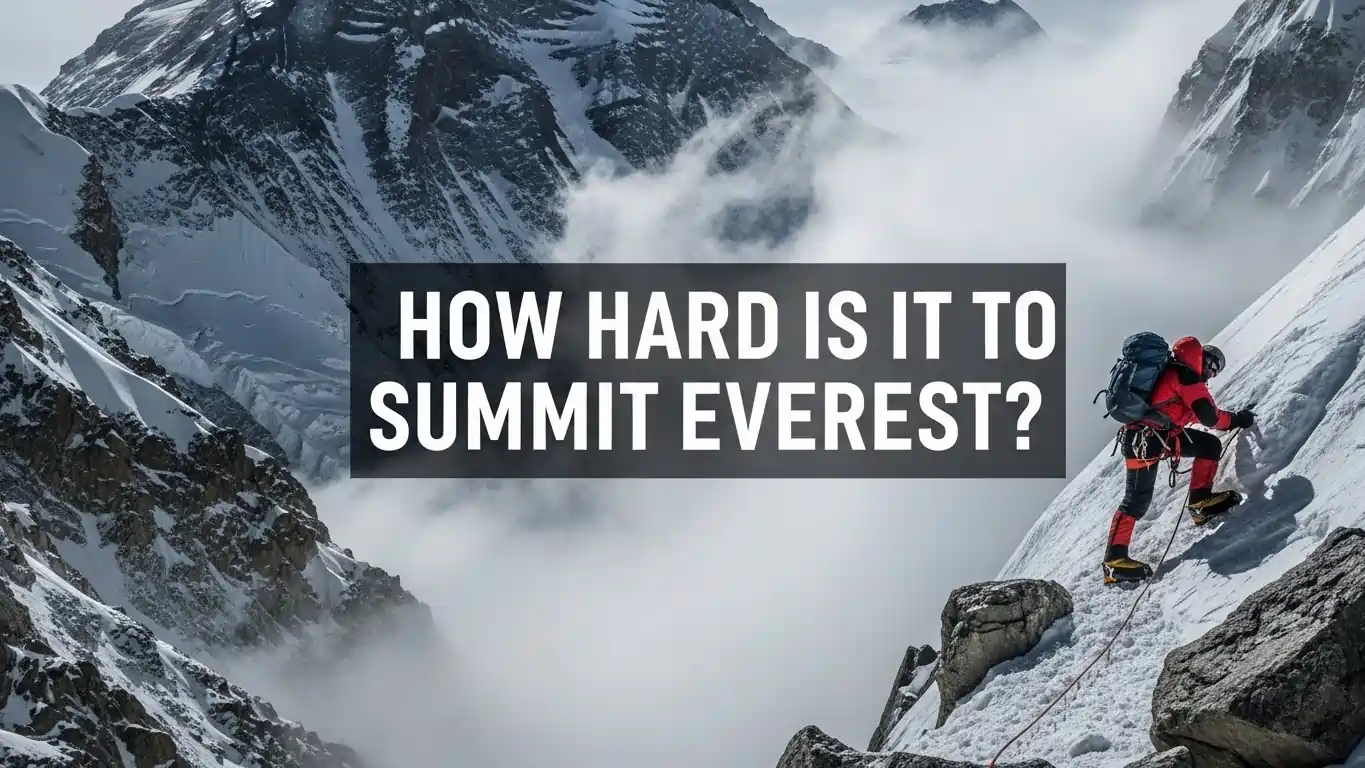
How Difficult Is It to Summit Everest?
Standing on Mount Everest remains dream for many climbers, yet questions bring hesitation. Extreme altitude drains strength, weather shifts without warning, risk follows every step, cost reaches life savings, failure rates stay high, fatalities remain real. Aspirants often struggle with fear of preparation collapse, physical breakdown, or forced retreat after months of effort.
In this blog, readers learn how hard it is to summit Everest through clear facts, real challenges, and practical insight. Coverage explains physical strain, mental pressure, dangerous sections, preparation demands, timing strategy, and partner choice, allowing climbers to judge readiness before committing to their Everest ambition and understand how to climb Everest.
What Is the Everest Summit?
Everest summit refers to the highest point on Earth, reaching 8,848.86 meters above sea level. Mount Everest sits on the Nepal-China border within the Mahalangur Himal range of the Himalayas. Many climbers attempt an expedition Everest to reach this point, which lies inside the extreme altitude zone where the human body cannot survive long without support. Oxygen levels drop sharply, making movement slow and exhausting.
Summiting Everest means standing on that highest point after completing full ascent from lower camps using fixed ropes, oxygen systems, and guided support. Achievement requires reaching final ridge beyond South Col and returning safely, not only touching top. Many attempts fail during descent due to fatigue and oxygen loss. True success counts only after safe return to lower camp.
Difference Between Base Camp and True Summit
| Aspect | Everest Base Camp | Everest Summit |
| Altitude | About 5,364 meters | 8,848.86 meters |
| Difficulty | Trekking level with acclimatization | Extreme high altitude climbing |
| Skills Needed | Hiking fitness | Advanced mountaineering skills |
| Oxygen Use | Not required | Essential for most climbers |
| Risk Level | Moderate | Life-threatening |
| Time Required | 8–14 trekking days | 6–9 weeks expedition |
Reaching Base Camp involves long trek through valleys and mountain villages with gradual altitude gain. Thousands of trekkers complete this journey each season without climbing experience.
Summit push demands technical climbing, rope work, ice sections, and survival under severe altitude stress. Only trained climbers with preparation, support, and timing progress beyond Base Camp toward true summit.
How Hard Is It to Summit Everest?
Summiting Everest is extremely hard due to combined physical, technical, mental, and logistical demands. Climbers face harsh weather, severe altitude, and prolonged exertion for weeks. Oxygen levels drop sharply above 8,000 meters, making even simple movements exhausting. Success requires months of preparation, acclimatization, and careful planning. Many aspirants turn back despite being close to summit due to fatigue, weather, or safety concerns.
Physical Difficulty and Endurance Requirements
Climbers must sustain long hours of uphill trekking and climbing while carrying heavy gear. Altitude reduces oxygen availability, causing rapid fatigue, shortness of breath, and slower movement. Core strength, leg stamina, and cardiovascular fitness are essential to handle steep slopes, ice, and snow. Even minor mistakes, such as tripping or misjudging a step, can lead to serious injury or exhaustion. Continuous physical conditioning and high-altitude training are necessary to endure the extreme effort over several weeks.
Technical Climbing Challenges
Summit routes include icefalls, crevasses, steep ridges, and rocky sections requiring advanced rope skills and ice-axe use. Fixed ropes and ladders aid climbers, but balance, knot work, and proper technique remain critical for safety. Handling crampons, anchors, belays, and rope systems under freezing temperatures demands constant focus. Weather changes can make even familiar routes treacherous, requiring adaptive problem-solving. Technical mistakes often result in life-threatening situations, making experience and skill essential.
Mental and Psychological Challenges at Extreme Altitude
Extreme isolation, cold, and lack of oxygen test concentration, decision-making, and emotional control. Climbers face anxiety, fear, hallucinations, and mental fatigue from prolonged exertion. Maintaining motivation during harsh conditions is essential to avoid dangerous errors. Psychological resilience helps manage risks, stay disciplined with pacing, and cope with unexpected obstacles. Mental preparation often determines who reaches the summit and who must turn back.
Time Commitment and Logistical Complexity
Everest expeditions typically last 6-9 weeks, including acclimatization, rest periods, and summit attempts. Organizing permits, guides, Sherpa support, oxygen, and supplies requires detailed planning and coordination. Weather delays, health issues, or route congestion can extend the schedule, demanding flexibility. Efficient logistics ensure safety, timely progress, and the possibility of summit success. Poor planning increases risks and reduces chances of reaching the top safely.
Factors That Make Summiting Everest Difficult
Climbers face multiple challenges that make Everest one of the hardest mountains to summit. Extreme altitude, unpredictable weather, long expedition duration, technical climbing sections, and overcrowding create high-risk conditions. Each factor demands careful planning, preparation, and decision-making. Understanding these difficulties helps aspirants evaluate readiness and manage expectations.
Extreme Altitude and Oxygen Deprivation
At altitudes above 8,000 meters, oxygen levels drop to about one-third of sea-level availability. This causes fatigue, dizziness, shortness of breath, and impaired decision-making. Climbers rely on supplemental oxygen to maintain performance, yet physical strain remains severe. Altitude sickness can develop suddenly, forcing many to abandon summit attempts. Acclimatization through staged climbs is crucial to minimize risks and improve endurance.
Harsh and Unpredictable Weather
Everest’s weather changes rapidly, with high winds, snowstorms, and subzero temperatures common. Sudden storms can trap climbers, reduce visibility, and increase frostbite or hypothermia risk. Even experienced climbers must adjust plans based on real-time conditions. Proper weather monitoring, flexible scheduling, and protective gear are essential for survival. Climbers often wait for brief windows of calm to attempt the summit safely.
Long Expedition Duration and Fatigue
Typical Everest expeditions last 6–9 weeks, including trekking, acclimatization, and summit attempts. Prolonged exertion causes cumulative fatigue, which reduces physical and mental performance. Extended exposure to cold and low oxygen intensifies exhaustion. Even small mistakes become dangerous when the body is drained. Adequate rest, pacing, and nutrition are vital for sustaining energy throughout the climb.
Technical Sections and Fixed Ropes
Key sections like Khumbu Icefall, Lhotse Face, and the Hillary Step require rope climbing, ladders, and ice-axe skills. Climbers must maintain balance and precision while managing heavy gear in extreme conditions. Mistakes on technical terrain can result in falls or serious injury. Proper training, prior experience, and familiarity with mountaineering equipment are essential. Guides and Sherpas assist, but climbers must execute skills independently for safety.
Crowding During Peak Summit Windows
Spring and autumn bring hundreds of climbers attempting summit simultaneously, causing bottlenecks. Overcrowding slows progress, increases risk of accidents, and stretches oxygen supplies. Climbers may wait in dangerous zones for hours, exposing themselves to cold and altitude stress. Timing and coordination are critical to avoid congestion-related hazards. Choosing less crowded windows or experienced expedition teams can reduce risks significantly.
Major Risky Points on the Everest Summit Route
The Everest summit route contains several sections with high risk that demand skill, focus, and experience. Crevasses, steep ice walls, and narrow ridges combine with extreme altitude to create life-threatening conditions. Above 8,000 meters, climbers enter the “death zone,” where oxygen is insufficient to sustain human life for extended periods. Fatigue, weather changes, and technical challenges intensify danger, making careful navigation essential. Awareness of these risky points helps climbers plan strategies and reduce hazards.
Death Zone
The “death zone” refers to altitudes above 8,000 meters where oxygen levels are insufficient to sustain human life for extended periods. In this zone, even short exertion can cause severe fatigue, hypoxia, and impaired decision-making. Climbers’ bodies cannot fully recover, making every step physically and mentally taxing. Prolonged exposure increases risks of frostbite, cerebral edema, or pulmonary edema, which can be fatal. Proper supplemental oxygen, careful pacing, and minimal time spent are essential for survival in the death zone.
Khumbu Icefall
Khumbu Icefall lies just above Base Camp and is one of the most dangerous sections on the south route. Shifting ice, deep crevasses, and towering seracs move unpredictably, risking collapse at any moment. Climbers must cross using ladders and fixed ropes while wearing crampons and using rope techniques. Even experienced climbers face high fatality risk here, especially during warm hours when ice shifts faster. Timing, guide expertise, and constant vigilance are critical for safe passage.
Western Cwm
The Western Cwm is a broad glacial valley following the Icefall, deceptively calm but still hazardous. Temperatures can rise dramatically under sun exposure, causing snow bridges to weaken over crevasses. High altitude increases fatigue and slows climbers, and storms can trap them with minimal shelter. Navigation requires attention to terrain and team coordination. Acclimatization stops in this section help reduce altitude-related illness before ascending higher.
Lhotse Face
Lhotse Face is a steep ice wall that requires technical climbing using fixed ropes and ice axes. Falling here can be fatal due to its sheer incline and hard ice surface. Climbers must manage exposure, weather changes, and ice conditions simultaneously. Physical strength and endurance are critical, as prolonged exertion occurs in low oxygen. Even a minor slip can lead to serious injury or death, making this section one of the most feared on the route.
South Col
South Col serves as the final high-altitude camp before the summit, situated in the death zone above 8,000 meters. Oxygen levels drop sharply, and the body cannot recover from exertion, increasing risk of frostbite, hypoxia, and exhaustion. Climbers face strong winds and extreme cold while preparing for the summit push. Time spent here must be minimal to avoid prolonged exposure to life-threatening conditions. Proper acclimatization and oxygen supply are critical for survival.
Hillary Step and Summit Ridge
The Hillary Step is a nearly vertical rock face just below the summit, followed by the narrow summit ridge. Climbers must use fixed ropes and careful foot placement to navigate this exposed section. Congestion during peak season increases risk of falls or delays in the death zone. Extreme fatigue and low oxygen make even minor mistakes dangerous. Successfully crossing the Hillary Step leads to the summit, but careful timing and precision remain essential for safe return.
Where Do Most Everest Summit Attempts Fail?
Most Everest summit attempts fail in the upper sections above Camp III, particularly between South Col and the summit ridge. This zone combines extreme altitude, technical climbing, harsh weather, and exhaustion, making success extremely difficult. Many climbers turn back here despite being close to the top.
Common Turnaround Points
- South Col (8,000 meters) – The last camp before the summit, located in the death zone, where low oxygen and extreme fatigue force many to stop.
- Hillary Step – Nearly vertical rock face just below the summit; congestion and physical difficulty cause climbers to retreat.
- Lhotse Face – Steep ice wall that demands technical rope climbing; minor errors can force a turnaround.
- Western Cwm – Though less technical, crevasses, heat, and fatigue can lead to early retreats during ascent.
- Khumbu Icefall – Early in the climb, shifting ice and seracs cause many inexperienced climbers to abandon their attempt.
Reasons Climbers Abandon Summit Pushes
- Severe altitude sickness, including HAPE or HACE.
- Extreme exhaustion and inability to continue physically.
- Sudden weather changes, including storms and high winds.
- Shortage of oxygen or malfunctioning oxygen systems.
- Bottlenecks and crowding in technical sections like Hillary Step.
- Equipment failure, including ropes, crampons, or clothing issues.
- Mental fatigue or fear preventing safe continuation.
Why Do Climbers Die on Mount Everest?
Climbers die on Mount Everest because of extreme altitude, harsh weather, technical challenges, and human errors that combine to create life-threatening conditions. Even experienced mountaineers face sudden illness, falls, or environmental hazards that can prove fatal. Risk increases sharply above 8,000 meters in the death zone, where the body cannot recover and small mistakes can become deadly, highlighting Mount Everest deaths.
Main Causes of Fatalities
Altitude-related illnesses, including high-altitude pulmonary edema (HAPE) and high-altitude cerebral edema (HACE), are among the leading causes of death. HAPE causes fluid accumulation in the lungs, making breathing extremely difficult, while HACE results in swelling of the brain, leading to disorientation, unconsciousness, or death if untreated. Falls and slips on steep ice, crevasses, and rocky terrain account for a significant portion of fatalities. Avalanches and icefall collapses, particularly in Khumbu Icefall, remain unpredictable and highly dangerous. Exhaustion from prolonged climbing reduces physical and mental performance, increasing the likelihood of errors. Hypothermia and frostbite also pose serious threats, impairing movement and decision-making while damaging tissue.
Role of Altitude, Weather, and Human Error
Extreme altitude reduces oxygen availability, causing fatigue, poor judgment, and organ strain. Climbers in the death zone cannot fully recover from exertion, making even simple tasks physically taxing. Weather changes abruptly, with storms, high winds, and whiteouts that can trap climbers or force them into risky maneuvers. Human errors, such as misjudging pace, route, timing, or improper use of supplemental oxygen, magnify danger. The combination of altitude, weather, and mistakes multiplies risk, making minor errors potentially fatal. Even experienced mountaineers can succumb when harsh conditions align with poor decisions or miscalculations.
How to Prepare to Summit Everest?
To prepare for Everest summit, climbers must combine prior experience, physical conditioning, acclimatization, proper gear, mental readiness, and reliable support. Success requires months of planning, training, and careful attention to every detail. Preparation reduces risks, improves endurance, and increases the likelihood of safely reaching the top and returning.
Required Climbing Experience and Prior Peaks
Climbers should have prior experience on high-altitude mountains, ideally above 6,000–7,000 meters. Attempting Everest without technical climbing experience or prior expeditions is extremely risky. Previous climbs teach essential skills such as using ropes, ice axes, crampons, and navigating crevassed terrain. Experience also builds confidence in managing altitude effects, pacing, and emergency scenarios.
Physical Training and Conditioning
Physical fitness is critical for Everest due to long hours of trekking, climbing, and carrying heavy loads. Cardiovascular endurance, leg strength, core stability, and overall stamina must be developed months before the expedition. Training should include long hikes, stair climbing, weighted backpack practice, and high-altitude simulations if possible. Strong physical conditioning reduces fatigue, prevents injuries, and helps climbers endure extreme weather and low oxygen.
Acclimatization Strategy
Proper acclimatization is essential to avoid altitude sickness and improve performance. Climbers follow a staged ascent, spending several days at intermediate camps to allow the body to adjust to reduced oxygen. Rotational climbs to higher camps followed by returns to lower camps help strengthen acclimatization. Monitoring health, oxygen levels, and symptoms throughout the climb ensures safer progression toward the summit.
Gear, Oxygen Use, and Support Team
Essential gear includes high-quality clothing, boots, crampons, harnesses, helmets, and climbing tools for technical sections. Supplemental oxygen is critical above 8,000 meters for most climbers. A reliable support team, including guides and Sherpas, provides safety, route fixing, load carrying, and emergency assistance. Proper equipment, logistics, and experienced support minimize risk and increase the chance of a successful summit.
Mental Preparation and Risk Management
Mental resilience is as important as physical conditioning for Everest. Climbers face fear, fatigue, isolation, and stressful decisions under life-threatening conditions. Preparing mentally includes visualization, stress management, decision-making practice, and developing patience. Risk management involves contingency planning, knowing when to turn back, and prioritizing safety over summit ambition. Strong mental preparation ensures climbers remain focused, calm, and capable of handling unexpected challenges.
Best Time to Summit Everest
The best time for Everest expedition is when weather conditions are relatively stable, winds are lower, and temperatures are manageable. Timing affects safety, oxygen efficiency, and likelihood of success. Summit attempts are most successful during short windows in spring and less commonly in autumn. Planning the climb around these periods minimizes exposure to storms and extreme cold. Choosing the right season also reduces risks of overcrowding on technical sections.
Spring Climbing Season Overview
Spring, from late April to May, is the most popular season for Everest expeditions. Temperatures are relatively warmer, winds decrease, and days are longer for climbing. Most climbers attempt the summit during this window because the weather is predictable enough for safe passage. Snow conditions are generally stable, and avalanches are less frequent compared with winter. This season also offers clear views of surrounding peaks, enhancing both safety and experience.
Weather Patterns and Summit Windows
Summit windows occur when short periods of calm, low-wind weather appear at high altitude. These windows usually last only a few days and determine when climbers can safely push for the top. Forecasts of temperature, wind speed, and storm systems are monitored closely by guides. Climbers plan rotations and rest days to align acclimatization with these windows. Missing the window can delay attempts or force retreat due to harsh conditions.
Why Autumn Attempts Are Rare?
Autumn, from late September to November, has less predictable weather than spring. Post-monsoon conditions bring colder temperatures, higher winds, and increased avalanche risk. Shorter daylight hours reduce time available for summit pushes. Fewer climbers attempt autumn expeditions due to these risks, making it a less favored season. Planning logistics and securing guides is also more difficult compared with spring.
How to Choose the Right Everest Expedition Partner?
To choose the right Everest expedition partner, climbers must evaluate experience, safety standards, logistics, and reliability. A professional company like Marvel Treks offers trained guides, Sherpa support, and proven success rates. The right partner ensures proper acclimatization schedules, oxygen supply, and emergency planning. Choosing carefully reduces risk, increases chances of summit success, and provides confidence throughout the expedition. Trustworthy operators also handle permits, transport, and on-ground arrangements efficiently.
Related Article: https://marveltreks.com/how-to-choose-best-company-for-everest-expedition/
Guide Experience and Success Rates
Experienced guides are crucial for safe navigation of Everest’s technical sections. They must have prior summits, high-altitude experience, and the ability to make rapid decisions under stress. Success rates reflect both skill and planning capabilities of the expedition team. Guides also mentor climbers, manage pacing, and recognize early signs of altitude sickness. Partnering with a company that maintains consistent track records increases safety and confidence on the climb.
Safety Protocols and Sherpa Support
Strong safety protocols, including emergency evacuation plans and health monitoring, are essential. Sherpa teams carry loads, fix ropes, and assist climbers in challenging sections, significantly reducing risks. Experienced Sherpas know local terrain, weather behavior, and potential hazards. Companies with strict safety standards enforce oxygen checks, rest schedules, and proper acclimatization. Reliable support minimizes accidents and ensures climbers can focus on reaching the summit.
Oxygen, Logistics, and Backup Plans
Proper oxygen management is critical above 8,000 meters for most climbers. Logistics include arranging permits, food, tents, high-altitude equipment, and transportation to camps. Backup plans cover sudden weather changes, equipment failure, or health emergencies. Reputable partners maintain spare oxygen cylinders, extra guides, and contingency strategies. Efficient logistics and prepared backups increase the likelihood of a successful and safe summit attempt.
Transparency in Pricing and Services
Clear communication of costs, services, and included amenities prevents misunderstandings or hidden charges. Transparency ensures climbers know what to expect for permit fees, guides, Sherpa support, equipment, and oxygen. Companies that provide detailed itineraries, terms, and cancellation policies demonstrate professionalism. Honest pricing reflects commitment to safety and quality rather than cost-cutting. This clarity allows climbers to focus on preparation and performance rather than logistical worries.
Conclusion
Summiting Everest is extremely hard due to extreme altitude, harsh weather, technical terrain, and prolonged physical and mental demands. Even experienced climbers face significant risks, and many attempts fail in the upper camps or death zone. The combination of low oxygen, fatigue, unpredictable conditions, and crowded routes makes success a rare and extraordinary achievement.
Proper preparation, prior climbing experience, physical conditioning, and mental resilience are essential for anyone attempting Everest. Choosing the right expedition partner, like Marvel Treks, with experienced guides, Sherpa support, and robust safety protocols greatly improves chances of reaching the summit safely. Respecting the mountain, understanding its risks, and prioritizing safety over ambition ensures climbers approach Everest with the caution and planning it demands.
How difficult is it to summit Everest?
Summiting Everest is extremely challenging due to high altitude, harsh weather, and technical climbing sections. It requires exceptional physical endurance, mental strength, and proper preparation.
What is the success rate for Everest climbers?
Around 30–40% of climbers attempting the summit successfully reach the top. Success largely depends on experience, weather, and timing.
Who should attempt Everest?
Only experienced high-altitude climbers with prior 6,000–7,000m peak experience should attempt Everest. Beginners or untrained climbers face extreme risks and low chances of success.
When is the best time to climb Everest?
The most favorable period is late April to May during the spring season. Weather is relatively stable, and summit windows are most accessible.
What are the deadliest sections of Everest?
The Khumbu Icefall, Lhotse Face, and summit ridge are considered the riskiest parts of the climb. These sections pose dangers from avalanches, crevasses, and falls.
Why do climbers die on Everest?
Most fatalities result from altitude sickness, sudden weather changes, or falling in technical sections. Human error and exhaustion also contribute significantly to deaths.
How long does an Everest expedition take?
A typical Everest expedition lasts 6–9 weeks from Base Camp to summit and back. The duration includes acclimatization, rest days, and weather delays.
How should one prepare for Everest?
Preparation requires rigorous physical training, acclimatization, and technical climbing practice. Choosing a reliable expedition team with experienced guides is also essential.
Inquire Now
Planning Everest, Base Camp, or any Himalayan trek? Get expert guidance, cost details, and availability instantly.
💬 Chat on WhatsApp📞 Chat on Viber