
Why Is K2 So Difficult to Climb?
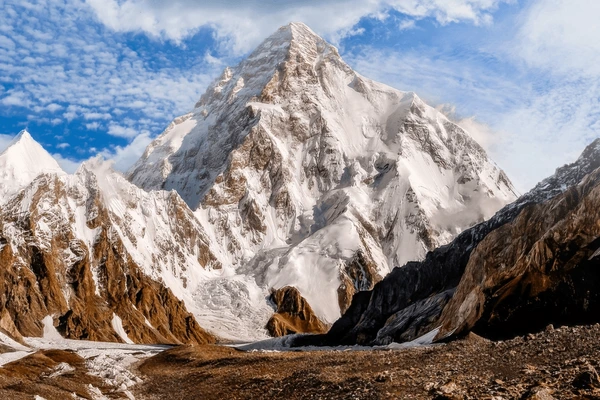
K2, the world’s second-highest mountain at 8,611 meters, is notorious for extreme difficulty and high fatality rates. Few climbers succeed due to its steep slopes, unpredictable weather, and technical challenges that test both skill and endurance. Its remote location and limited rescue options further increase risks for those attempting the summit.
In this blog, we explore why is K2 so hard to climb, covering its unique hazards, preparation tips, suitable climbers, best seasons, and the role of professional expedition support in tackling this legendary peak. Understanding these factors helps climbers make informed decisions before attempting a K2 expedition.
Start Your K2 Expedition Journey
Short Overview of K2 Mountain
K2 rises to 8,611 meters, making it the second-highest peak on Earth after Everest. It is located in the Karakoram range, straddling the border between Pakistan and China. The mountain’s towering elevation, combined with steep and exposed slopes, makes it one of the most challenging climbs for mountaineers worldwide.
In this blog, we explore why K2 is so hard to climb, covering its unique hazards, preparation tips, suitable climbers, best seasons, and the role of professional expedition support in tackling this legendary peak. Understanding these factors helps climbers make informed decisions about the location of K2 before attempting a K2 expedition.
Why Is K2 So Hard to Climb?
K2 is so hard to climb because it combines extreme altitude, technical terrain, unpredictable weather, and high-risk conditions that challenge even the most experienced mountaineers. Its steep slopes, ice-covered ridges, and remote location leave little margin for error. Climbers face short weather windows, limited rescue options, and one of the highest fatality rates among 8000-meter peaks. Success requires advanced skills, physical endurance, careful planning, and understanding the K2 climbing duration under constant danger.
Steep Technical Terrain with Sustained Rock and Ice Climbing
K2 features long stretches of steep rock and ice that demand continuous technical climbing. Routes include sharp ridges, mixed rock-ice sections, and near-vertical faces. Climbers must use fixed ropes, crampons, and ice axes almost constantly. Unlike Everest, no long “easy” sections exist, making each step physically and mentally exhausting. Each section requires precise movement and careful judgment to avoid falls.
Extreme and Unpredictable Weather
Weather on K2 can change within hours, with sudden storms, high winds, and heavy snowfall. Temperatures drop dramatically at night, increasing frostbite and hypothermia risks. Climbers must monitor forecasts closely, as even a short delay can lead to dangerous exposure and disrupted summit attempts. Constant vigilance is essential to decide when to advance or retreat.
High Avalanche and Serac Fall Risk
Steep slopes and unstable ice formations create frequent avalanche and serac fall hazards. Even experienced climbers face unpredictable snow slides or collapsing ice blocks. Careful route selection and constant vigilance are required to navigate these dangers safely. Protective gear and real-time risk assessment are critical for survival.
Limited Rescue Options and Remoteness
K2’s remote location in the Karakoram makes rescue operations difficult and slow. Helicopter evacuations are often impossible above certain altitudes, and ground assistance may take hours or days. Teams must be self-sufficient, carrying emergency supplies and planning for worst-case scenarios. Climbers cannot rely on immediate help in case of accidents or illness.
Short and Unstable Summit Window
Summit attempts require a narrow weather window, often just a few days in the climbing season. Delays due to storms or acclimatization problems can force climbers to turn back. This limited window increases pressure, fatigue, and risk during the final push to the top. Careful timing and strategic decision-making are crucial to reach the summit safely.
High Fatality Rate Compared to Everest
K2 has one of the highest fatality rates among 8000-meter peaks, with roughly one in four climbers perishing historically. Technical difficulty, unstable weather, and limited support contribute to these statistics. This reputation reinforces its status as the world’s most dangerous major peak. Past incidents emphasize the extreme risks and the need for thorough preparation.
Ready to Take On the Savage Mountain?
Connect with Marvel Treks for expert expedition support and discover the thrill of climbing the legendary K2.
How to Prepare for a K2 Expedition?
To prepare for a K2 expedition, climbers must build advanced skills, gain high-altitude experience, and develop both physical and mental endurance. Proper acclimatization, technical training, and strategic planning are essential. Every detail, from logistics to safety protocols, must be meticulously addressed, including understanding the cost for a K2 expedition. Preparation determines not just success, but survival on this highly demanding peak.
Required Prior Experience on Multiple 7000m and 8000m Peaks
Climbers should have summited several 7000-meter peaks and ideally one or more 8000-meter mountains. This experience helps the body adapt to extreme altitude, improves stamina, and builds confidence in handling technical challenges. Prior expeditions teach climbers how to cope with fatigue, weather delays, and high-altitude medical issues. It also provides insight into pacing, nutrition, and equipment management essential for K2.
Advanced Technical Climbing Skills
K2 demands expertise in rock, ice, and mixed climbing. Skills such as using crampons, ice axes, fixed ropes, and anchors are critical. Climbers must also master glacier navigation, crevasse rescue, and steep ridge techniques to safely manage the mountain’s complex terrain. Continuous practice on technical climbs helps refine efficiency and reduces the risk of accidents during the ascent.
Physical Conditioning and Altitude Adaptation
Endurance, strength, and cardiovascular fitness are essential for sustained climbing. Long hikes with weighted backpacks, stair climbing, and aerobic training prepare the body for prolonged exertion. Structured acclimatization schedules reduce altitude sickness risk and improve performance during summit pushes. Regular high-altitude training also strengthens breathing efficiency and oxygen utilization.
Mental Resilience and Decision-Making Under Pressure
High-risk conditions require strong mental stamina. Climbers must remain focused during long, exhausting days, make rapid decisions under extreme stress, and manage fear and uncertainty. Mental preparation is as important as physical training for coping with K2’s unpredictable challenges. Visualization and scenario planning further sharpen judgment and confidence under pressure.
Logistics Planning and Safety Protocols
Successful expeditions depend on meticulous planning, including route selection, camp placement, food supply, and communication systems. Emergency response plans, weather monitoring, and safety checks are critical. Proper logistics reduce risk, save time, and allow climbers to focus on climbing rather than problem-solving during critical moments. Advanced planning also ensures quick adaptation if conditions change unexpectedly.
Is K2 Expedition for You?
K2 expedition is not for everyone. Only highly experienced climbers with multiple 7000m or 8000m ascents, advanced technical skills, and excellent physical conditioning should attempt it. The mountain’s extreme terrain, unpredictable weather, and high fatality rate demand preparation, resilience, and the ability to make critical decisions under pressure.
Climbers who are inexperienced, unfit, or uncomfortable with high-risk environments should not consider K2. Risk tolerance, long-term mountaineering goals, and a 16-week commitment to rigorous training play a decisive role in whether an attempt is safe or realistic. For those with the right experience and mindset, a K2 expedition offers unmatched achievement and Himalayan adventure, but learning how to climb k2 mountain through a multi-year progression of 7,000m and 8,000m peaks is an essential prerequisite before committing to the “Savage Mountain.”
Best Time for Climbing K2
The best time for climbing K2 is during the summer months, particularly from July to early August, when weather conditions are relatively stable and summit windows are short but achievable. Careful timing is critical due to unpredictable storms and extreme high-altitude conditions.
Primary Climbing Season: July to Early August
The main climbing season occurs in mid-summer, when temperatures are warmer and the jet stream shifts, reducing the intensity of high-altitude winds. This period provides the most reliable weather window for summit attempts. Expeditions must plan precisely, as even minor delays can push climbers into dangerous storm conditions.
Weather Patterns in the Karakoram
The Karakoram range experiences sudden storms, heavy snowfall, and high winds even in summer. Weather can change within hours, making forecasts essential for safe climbing. Avalanches and icefall risks increase after snowfall, so monitoring conditions continuously is crucial for every stage of the ascent.
Why Timing Matters More on K2 than Everest?
Unlike Everest, K2 has no “easy” route or extended summit window. Poor timing can trap climbers in deadly conditions with limited rescue options. The combination of steep terrain, technical challenges, and extreme weather makes precise scheduling critical for safety and summit success.
How an Experienced Expedition Company Helps?
An experienced expedition company like Marvel Treks provides critical support for climbers attempting K2. They manage technical, logistical, and safety aspects, reducing risks and increasing the chances of a successful summit. Their expertise includes route planning, weather analysis, high-altitude support, and team coordination, allowing climbers to focus fully on climbing. Professional guidance is essential on a peak as dangerous and demanding as K2.
Route Fixing and Safety Management
Expedition companies establish fixed ropes, secure anchors, and identify safe pathways along steep or exposed sections. They monitor objective hazards such as rockfall, avalanches, and crevasses. Proper route fixing reduces accident risks and ensures climbers can move efficiently across technical terrain.
Weather Forecasting and Decision Support
Experienced teams provide accurate, real-time weather forecasts tailored for high-altitude conditions. They advise on summit timing, retreat decisions, and daily climbing schedules. Effective decision support prevents exposure to storms and extreme winds, which are common on K2.
High-Altitude Logistics and Emergency Planning
Companies handle oxygen supply, food distribution, camp setup, and communication systems. They prepare contingency plans for altitude sickness, injuries, or sudden weather changes. High-altitude logistics ensure climbers remain self-sufficient and safe throughout the expedition.
Team Coordination and Risk Reduction
Expedition leaders coordinate guides, Sherpas, and support staff to maintain efficient workflow. They manage acclimatization schedules, monitor health, and enforce safety protocols. Coordinated teams reduce fatigue, prevent errors, and increase the probability of a successful and safe summit attempt.
Conclusion
K2 remains one of the most challenging and dangerous mountains in the world. Its extreme technical terrain, unpredictable weather, high avalanche risk, and limited rescue options make it suitable only for highly experienced climbers. Success on K2 depends on thorough preparation, advanced skills, physical conditioning, and mental resilience.
Partnering with an experienced expedition company like Marvel Treks significantly increases safety and efficiency. Professional support in route fixing, weather forecasting, logistics, and team coordination allows climbers to focus on the ascent while minimizing risks. With careful planning, proper training, and expert guidance, summiting K2 becomes a demanding but achievable goal for prepared mountaineers.
How high is K2?
K2 is 8,611 meters tall. It is the world’s second-highest mountain.
Why is K2 more dangerous than Everest?
Steep technical terrain makes climbing extremely difficult. Unpredictable weather and limited rescue options increase risks.
Who should attempt K2?
Only climbers with experience on 7000m or 8000m peaks. Advanced technical skills and strong physical conditioning are required.
When is the best time to climb K2?
July to early August provides the safest weather window. Short summit periods require precise timing for success.
What skills are needed for K2?
Rock, ice, and mixed climbing expertise is essential. High-altitude experience and technical proficiency are required.
How do expedition companies help on K2?
They manage route fixing, logistics, and camp setup. They also provide weather guidance and emergency support.
How long does a K2 expedition take?
Expeditions usually last 6–8 weeks. This includes acclimatization, base camps, and summit attempts.
Can beginners climb K2?
No, K2 is only for highly experienced climbers. Inadequate preparation makes it extremely dangerous for novices.

Ready for your next Himalayan adventure?
Plan Your Next Big Adventure with Us
Explore Our AdventuresJoin our expert-guided journeys across Nepal and beyond, from classic trails to epic summits.